
How to Clean a Stainless Steel Sink
Need some help getting shine to your stainless steel sink? Here’s a full guide for how to clean a stainless steel sink step by step, including how to polish a stainless sink and all your FAQs!

Stainless steel sinks are a durable, easy-to-maintain option for your kitchen. But if they aren’t cared for properly, they can look dull, scratched, or full of water stains. There’s not much I love more than a freshly-cleaned sink, and it’s something I’ve worked on perfecting over the years. So, let’s talk about how to get your stainless steel sink looking fresh and sparkly and new!
How to Clean Your Stainless Steel Sink
Daily / Weekly Maintenance Cleaning
I give my stainless steel sink a quick, basic cleaning multiple times a week. The kitchen doesn’t feel like it has been properly cleaned unless the sink has been taken care of! Here’s the process I like to use:
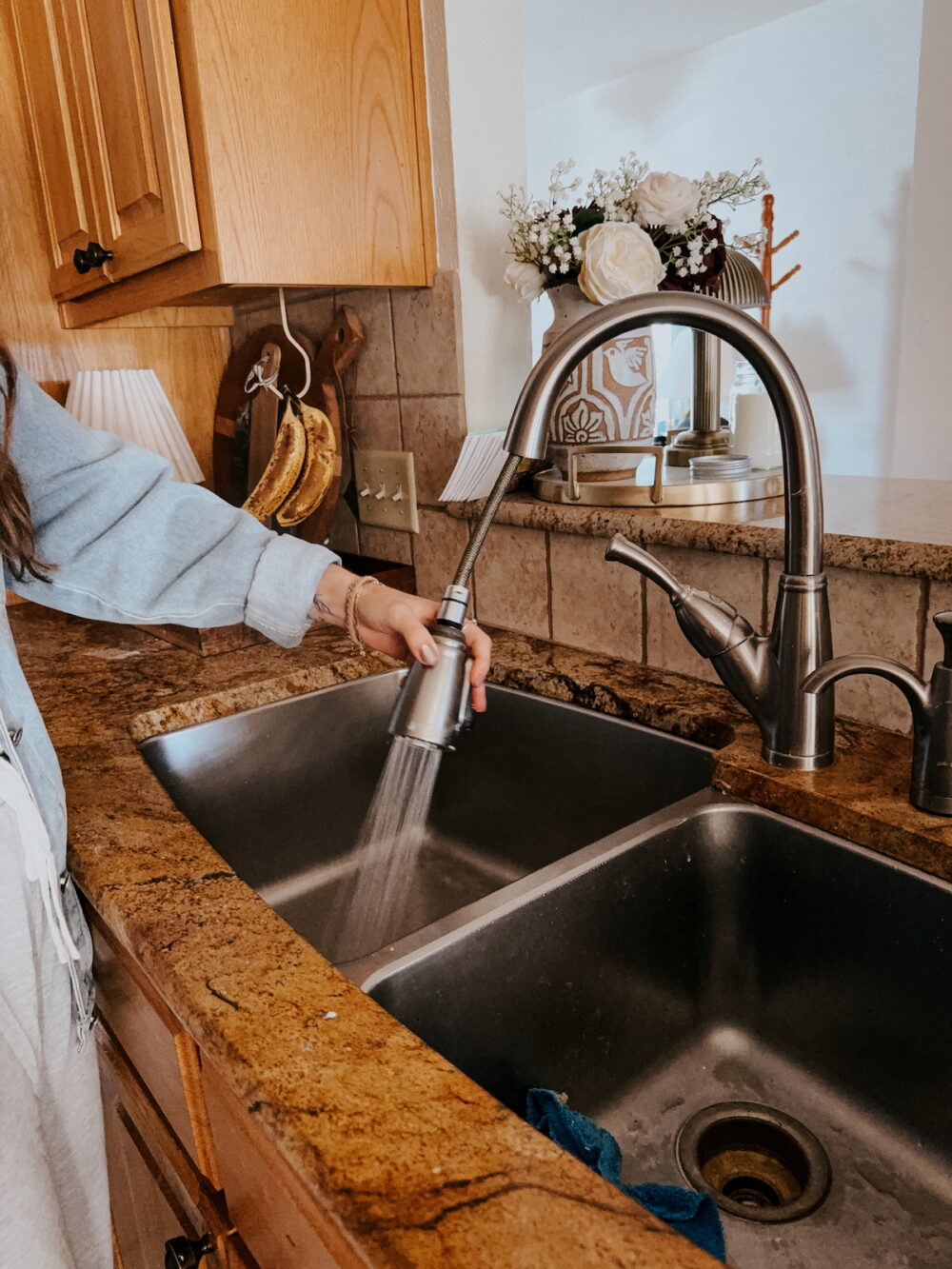
- Start by rinsing off any food or crumbs with warm water.
- Add a few drops of mild dish soap to a sponge or microfiber cloth. If it’s particularly dirty, I’ll use Dawn PowerWash and spray it all over the sink.
- Scrub with the grain of your stainless steel.
- Rinse thoroughly with warm water.
- (Optional) Use a dry microfiber cloth to dry the sink. This prevents water spots and keeps things looking extra nice!
A note on scrubbing with the grain: stainless steel has a grain, or faint parallel striations that run along it. It’s important to always clean with the grain rather than against it. This helps prevent scratches or dulling over time!
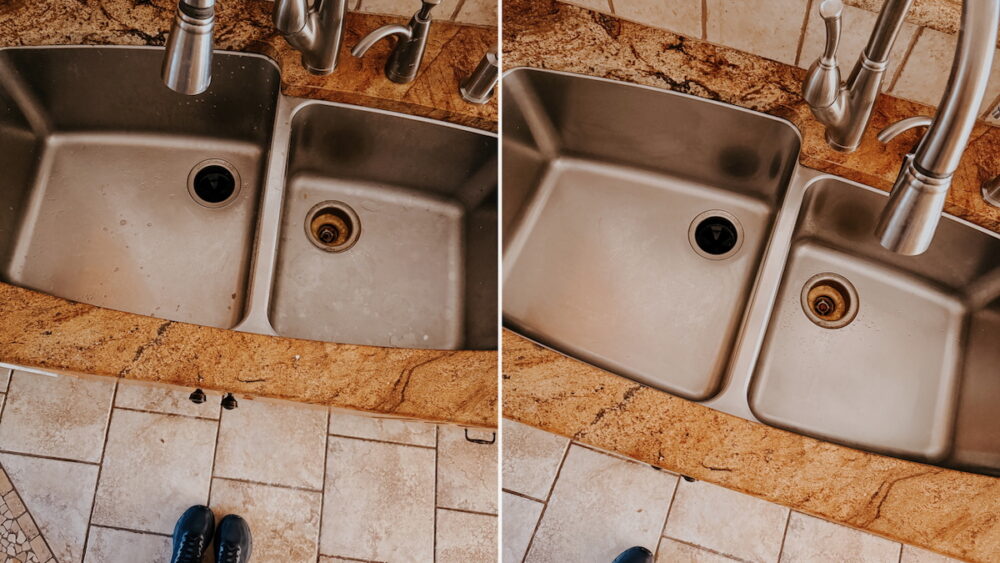
A subtle – but powerful – before and after!
Monthly Deep Cleaning
While the above method takes about 5 minutes and can be done on a very regular basis, sometimes you want a deeper clean. If you’ve just hosted a big dinner party or if you’re doing a thorough kitchen clean, here’s a great method to use:
- Sprinkle baking soda all over the sink, or Bar Keepers Friend (I recommend the soft cleanser for stainless steel surfaces).
- Use a damp sponge or cloth to make a paste and scrub with the grain to remove any stains.
- Rinse thoroughly with warm water and be sure to buff it dry with a soft cloth!
Quick Tips
- If you’re dealing with rust or mineral deposits from hard water, you can try creating a paste with baking soda and white vinegar or lemon juice. It’s a bit harsher so I wouldn’t do this all the time and use caution when you do, but it’s great for a really deep clean!
- You should always avoid using steel wool, chlorine or bleach, or any abrasive cleaners on a stainless steel kitchen sink. It can dull the sink’s shine and create scratches over time.
- Make sure to always remove any dirt or loose food particles before cleaning your sink, as they can scratch the sink when you start scrubbing!
My Favorite Sink Cleaning Products
I don’t use much to clean my stainless steel sink, but there are a few things I reach for over and over:
I don’t typically use a stainless steel cleaner for the sink, those those can be great for appliances! But, I do think a polish can be great if you want a deep clean – read onto the next section for more on that!

Company Coming? How to Polish Your Sink
If you really want to up your sink’s shine and give it a really deep clean, you can give it a quick polish after you do your daily cleaning!
This isn’t an all-the-time thing, and it honestly isn’t something you have to do at all. But, if you’re going for a “wow this kitchen is really clean vibe”, it’s a great low-effort way to get there.
To polish your stainless steel sink, you can use either a few drops of mineral oil or a stainless steel polish. Buff your freshly-cleaned sink with a cloth until it shines!
Stainless Steel Sink FAQs
How Often Should I Clean My Sink?
My general routine is as follows:
- Daily – quick rinse and wipe down
- Weekly – more thorough clean with dish soap
- Monthly/As Needed – full deep clean
Why Does My Stainless Steel Sink Look Scratched?
Over time, some scratches on the surface of the sink are inevitable. It’s just a sign that it has been used and loved! But, if the scratches are more than you’d like to see, it’s likely due to improper care. You can help prevent future scratches and make the surface look better on a day-to-day basis with more consistent cleaning, and polishing it can reduce the appearance of scratches!