
How to Clean Walls Without Damaging Paint (Easy, Safe Methods)
Last updated on June 15th, 2026 at 10:39 am
Tired of dingy, dirty walls? Here’s a rundown of how to clean your walls without damaging the paint.
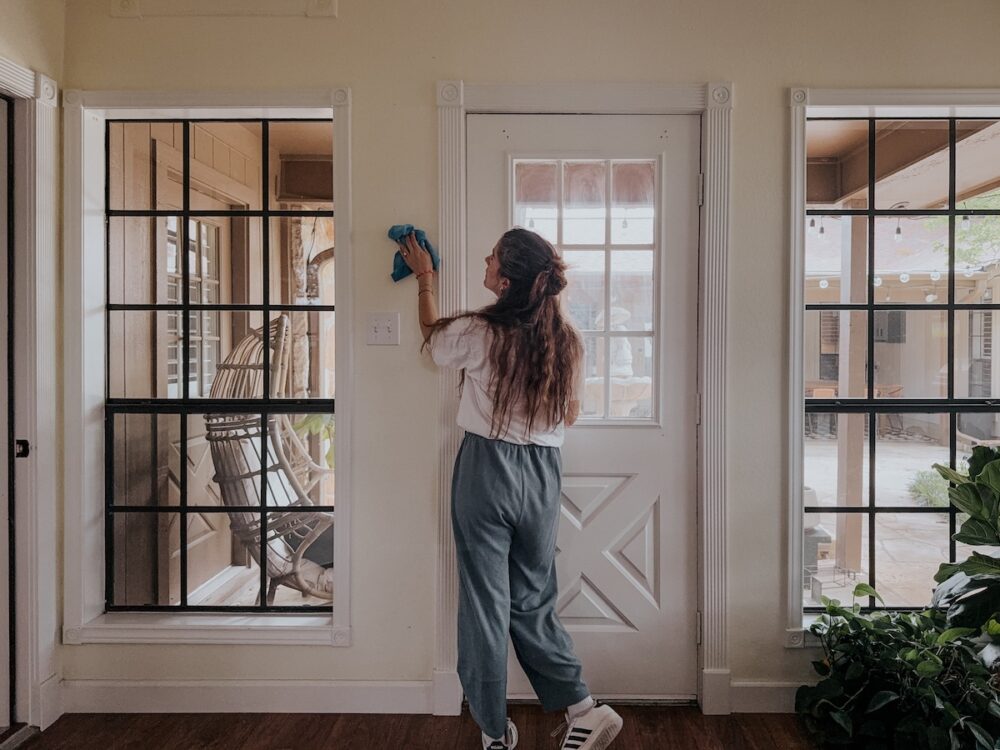
Walls tend to be one of those things you don’t think about cleaning until you suddenly notice fingerprints, scuffs, or smudges everywhere. The tricky part is figuring out how to clean them without ruining the paint or making things worse. The good news is, you don’t need anything complicated or harsh to get them looking fresh again.
Here’s a simple, safe way to clean your walls without damaging the paint.
The Safest Way to Clean Walls Without Damaging Paint
The easiest way to clean painted walls is to use a soft cloth with warm water and a small amount of gentle soap (like dish soap), then lightly wipe away dirt and marks without scrubbing too hard.
For most everyday messes, this is all you need! No heavy-duty cleaners required.
If you’re dealing with scuffs or fingerprints, you can also use a magic eraser very gently for spot cleaning.
What You’ll Need:
You don’t need much for this:
- Soft microfiber cloth or sponge
- Warm water
- Mild dish soap
- Magic eraser (optional, for scuffs)
- Dry towel
How to Clean Walls (Step-by-Step)
Step 1: Dust the wall first
Before adding any moisture, quickly dust the wall with a dry cloth or duster. This helps prevent streaking or just spreading dirt around.
Step 2: Mix a gentle cleaning solution
Add a couple of drops of dish soap to warm water in a large bowl or bucket. You want a mild solution, not anything strong or harsh. I like to use Dawn dish soap!
Step 3: Lightly wipe the wall
Dip your cloth in the solution, wring it out well, and gently wipe the wall in small sections. Avoid soaking the surface.
Step 4: Tackle scuffs carefully
For stubborn marks, use a magic eraser with very light pressure. Don’t scrub aggressively—most marks come off quickly.
Step 5: Dry the wall
Go back over the area with a dry towel to prevent water spots or streaking.
How to Remove Scuff Marks Without Damaging Paint
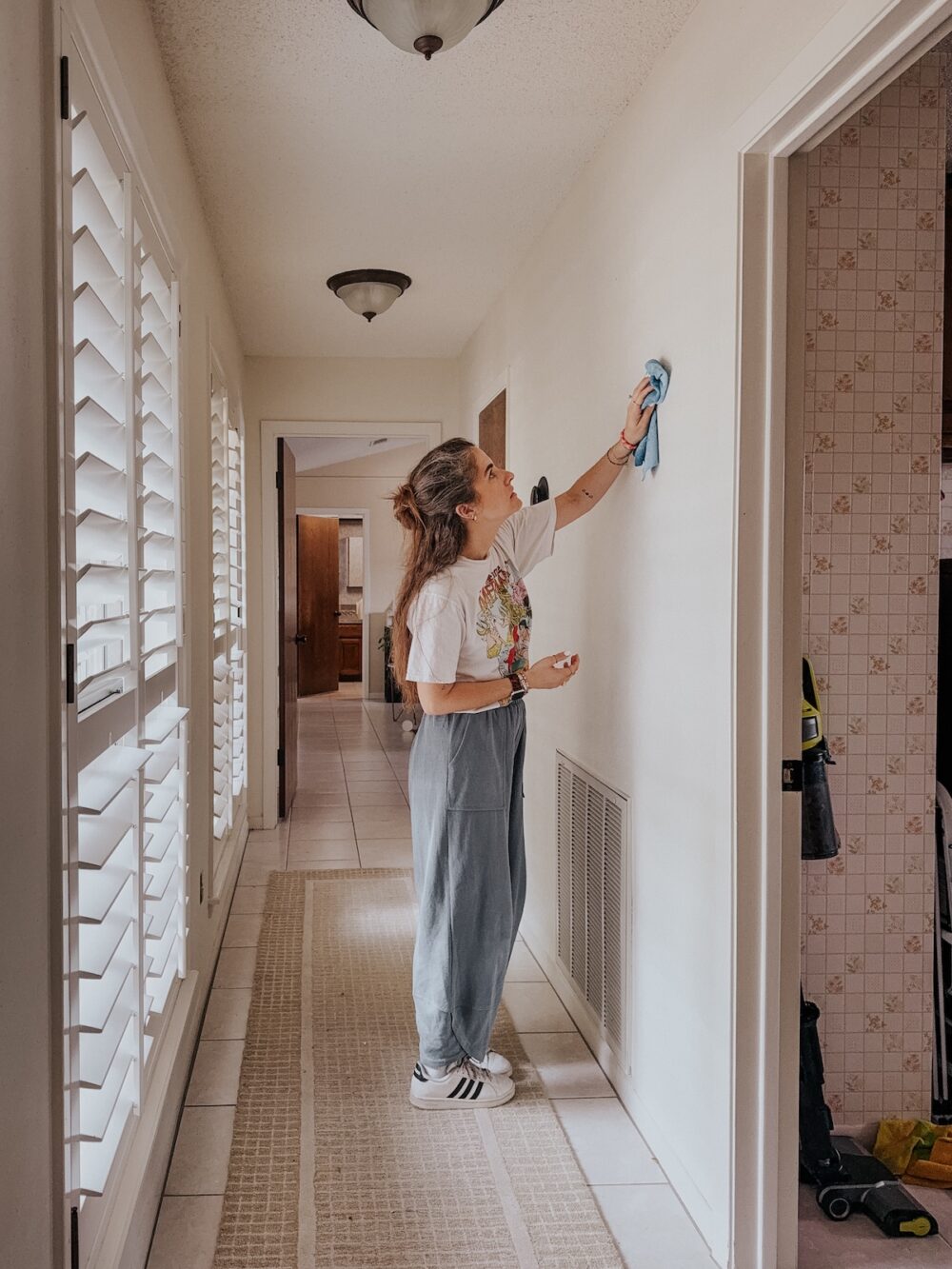
Scuff marks are usually the most frustrating part of wall cleaning, but they’re also the easiest to overdo when it comes to the repair.
A magic eraser works well, but the key is to use it lightly. Aim for more like a gentle buff than a scrub.
If the paint is matte, builder-grade, or just old, test a small area first. You want to make sure that you don’t remove any paint!
Common Mistakes to Avoid
Using too much water
Painted walls don’t need to be soaked. Too much water can cause streaking or damage over time.
Scrubbing too hard
Most wall marks come off with gentle pressure. Scrubbing can actually remove paint.
Skipping a test spot
Especially with magic erasers or older paint, always test a small hidden area first.
Using harsh cleaners
Strong chemicals are usually unnecessary and can dull or damage paint finishes.
Other Ways to Clean Walls
If you prefer alternatives, there are a few other safe methods:
Vinegar and water solution
A mix of water and a small amount of vinegar can work for general cleaning, but avoid overusing it on painted surfaces.
A mop!
I’ve been seeing a ton of people use a mop like this to clean their walls lately, and it certainly seems to be a faster method!
When Walls Need More Than Cleaning
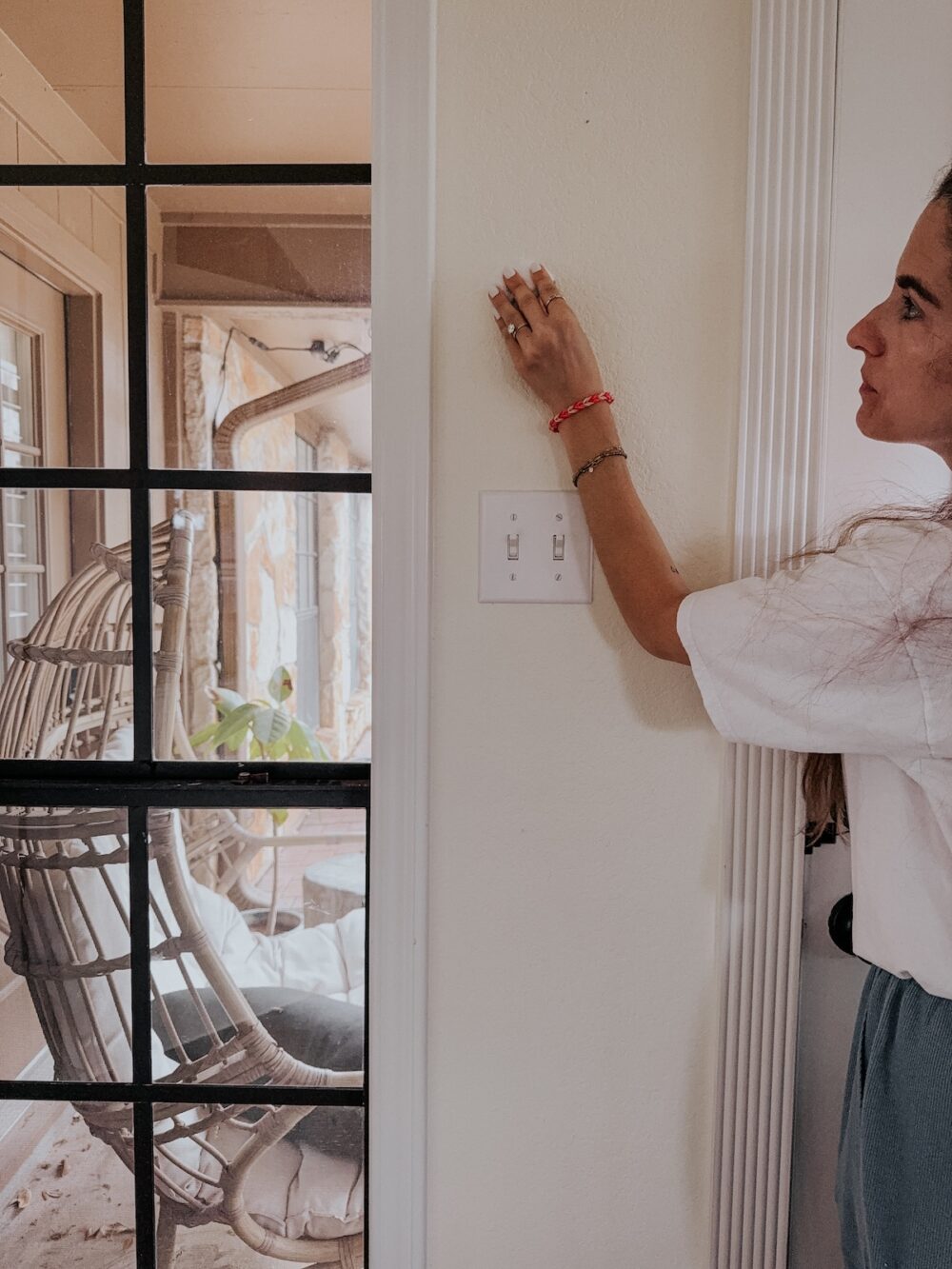
Sometimes, cleaning doesn’t fully fix the problem – especially if the marks are deeper or the paint has worn down.
In those cases, a quick paint touch-up might be the better solution. Even small touch-ups can make a room feel noticeably fresher. Here’s a full tutorial for how to paint a room, if you need some help!
FAQs About Cleaning Walls
What is the safest way to clean painted walls?
The safest method is warm water with a small amount of mild dish soap and a soft cloth. Always avoid harsh scrubbing.
Can you use Magic Erasers on walls?
Yes, but only gently and in small areas. Overuse can remove paint or dull the finish.
How often should you clean your walls?
Most homes only need wall cleaning every few months, or as needed when scuffs and marks appear.