
How Often Should Your Change Your Home Air Filters?
I’m back with another post in my series on basic home maintenance tips & tricks. Today, we’re tackling the HVAC filters. How often should you change your home air filters? How the heck do you do it? All of your answers are right here.
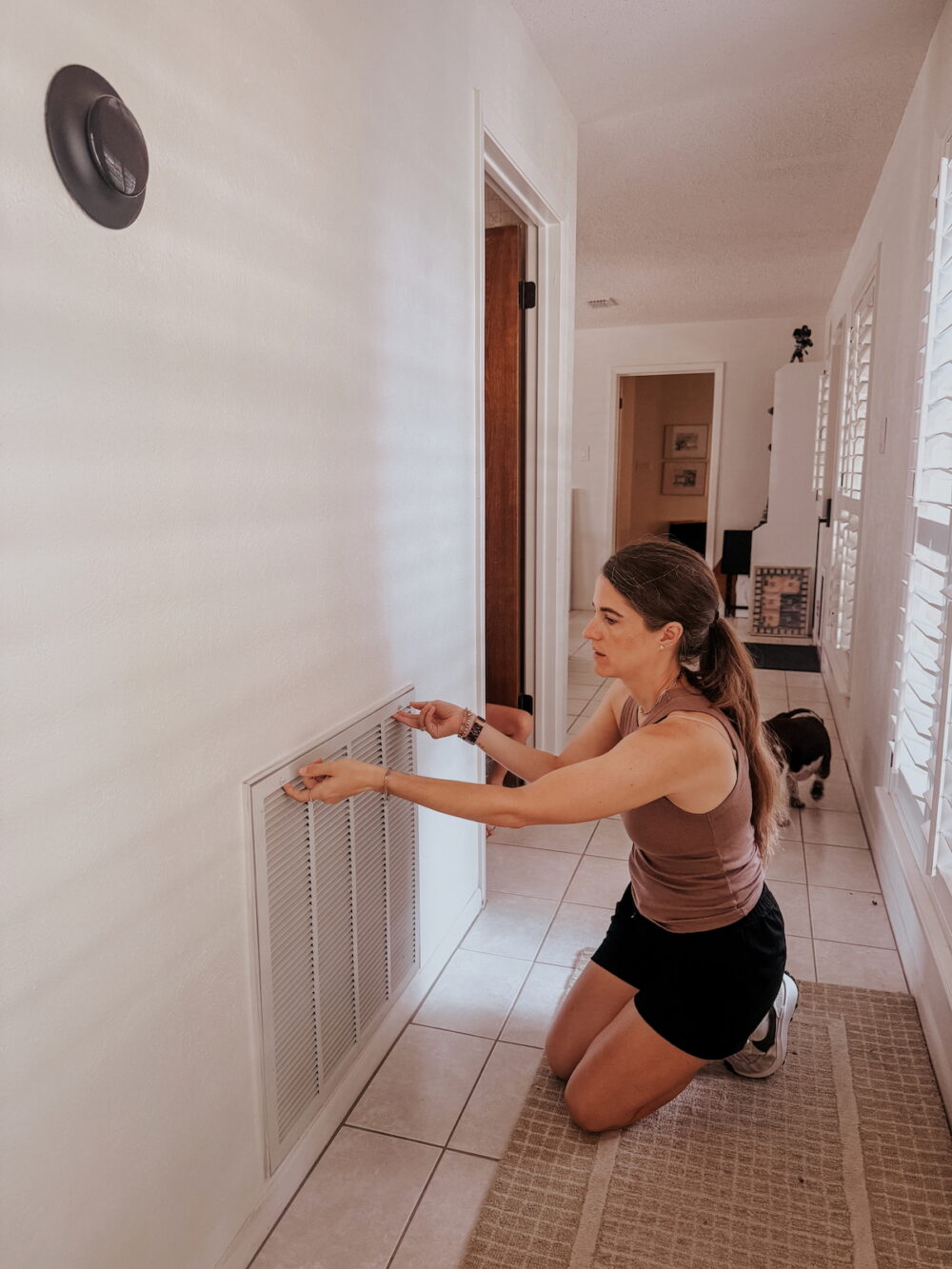
Changing your home’s air filter is one of those maintenance tasks that’s easy to ignore. That is, until your HVAC system starts struggling, your energy bills creep up, or your house feels dustier than usual. Then it’s super obvious that it’s time!
The good news is, replacing an air filter is incredibly simple. It takes less than five minutes and it can help keep your heating and cooling system running more efficiently. It’s a simple home maintenance task that should absolutely be a regular on your to-do list.
If you’ve never changed an air filter before (or can’t remember the last time you did), here’s everything you need to know.
Why Changing Your Home Air Filter Matters
Your HVAC system’s air filter is designed to trap dust, dirt, pet hair, pollen, and other airborne particles before they circulate throughout your home. Over time, those particles build up and clog the filter. When that happens, your HVAC system has to work harder to push air through the filter and throughout your home.
A dirty air filter can lead to:
- Reduced airflow
- Higher energy bills
- Increased dust in your home
- Poor indoor air quality
- Extra wear and tear on your HVAC system
Regularly replacing your air filter is one of the easiest ways to help extend the life of your heating and cooling system while keeping your home more comfortable.
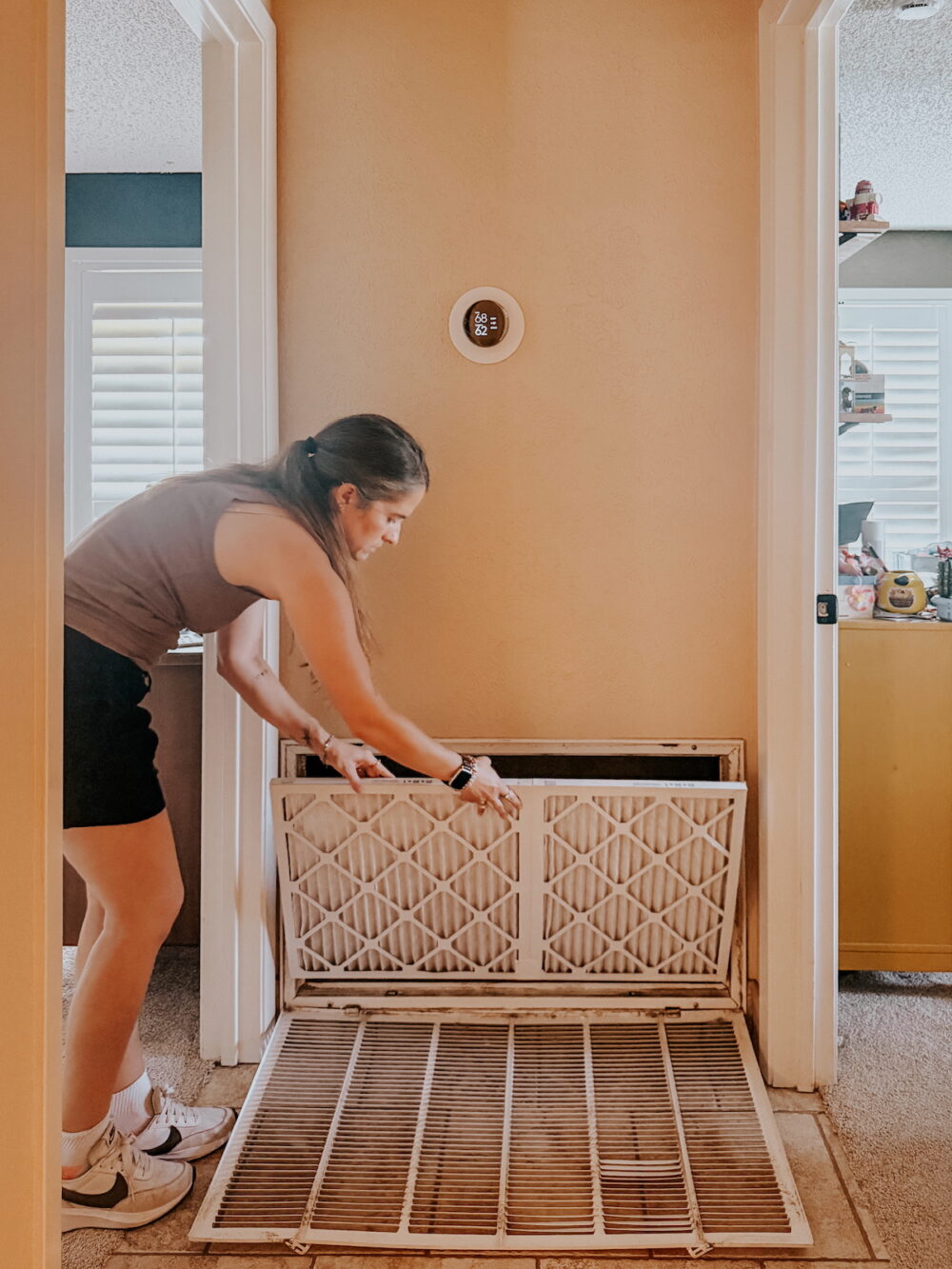
How Often Should You Change Your Air Filter?
One of the most common questions homeowners have is how often they should replace their air filter. Unfortunately, there isn’t a one-size-fits-all answer. For most homes, changing the filter every 1-3 months is a good rule of thumb. However, several factors can affect how quickly your filter gets dirty:
Homes with Pets
If you have dogs or cats, pet hair and dander can clog filters more quickly. Consider checking your filter monthly and replacing it every 30-60 days if needed.
Homes with Allergies or Asthma
If someone in your household struggles with allergies, asthma, or other respiratory issues, replacing the filter more frequently can help improve indoor air quality.
Larger Households
More people generally means more dust, more activity, and more particles circulating through the air. You may find yourself replacing filters more often than average.
Seasonal Usage
Your HVAC system works hardest during the hottest and coldest months of the year. During those seasons, filters tend to collect debris more quickly.
Vacation Homes or Low-Use Homes
If your HVAC system doesn’t run very often, your filter may last longer than the standard recommendation.
The Best Rule: Check It Monthly
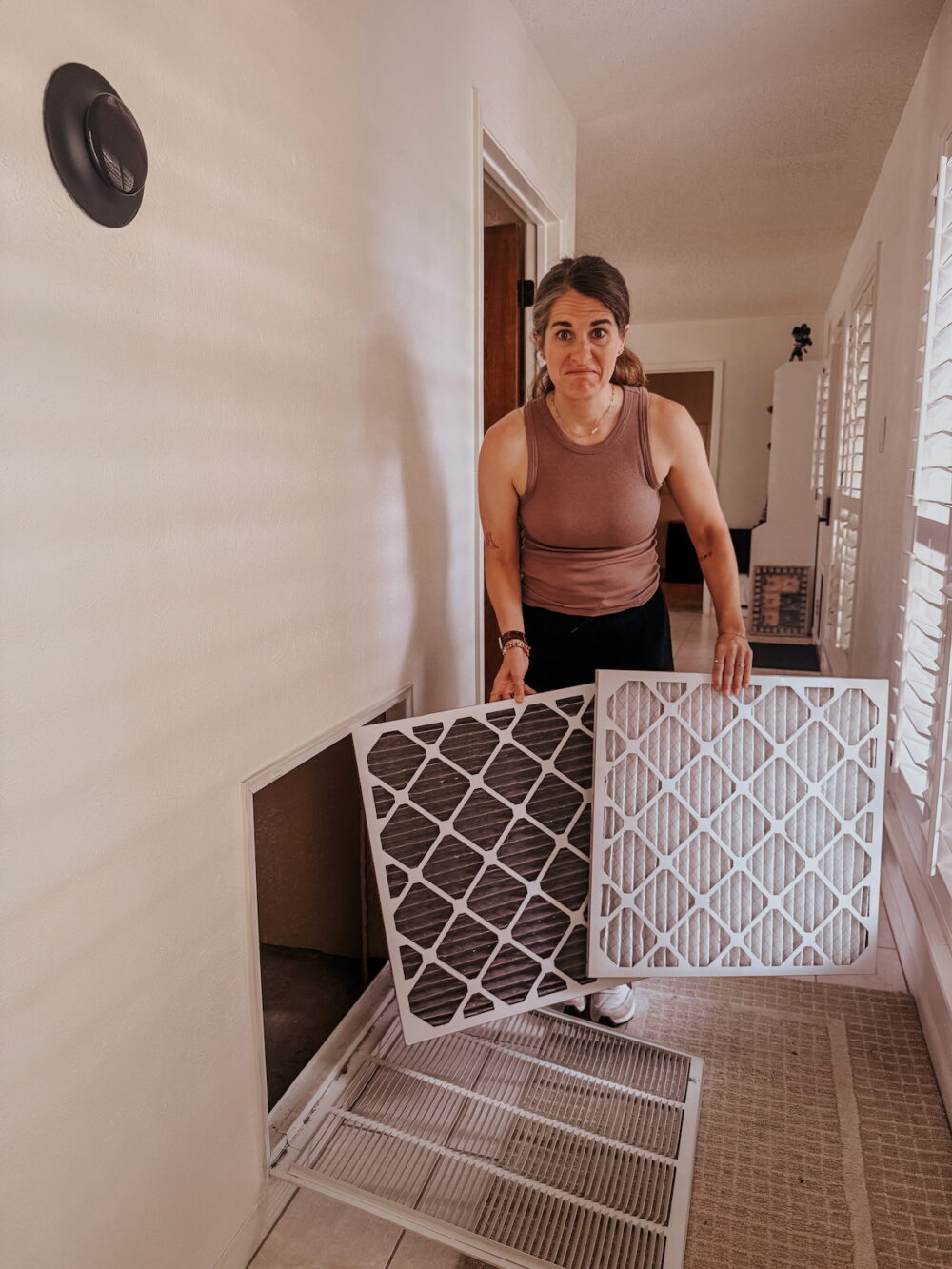
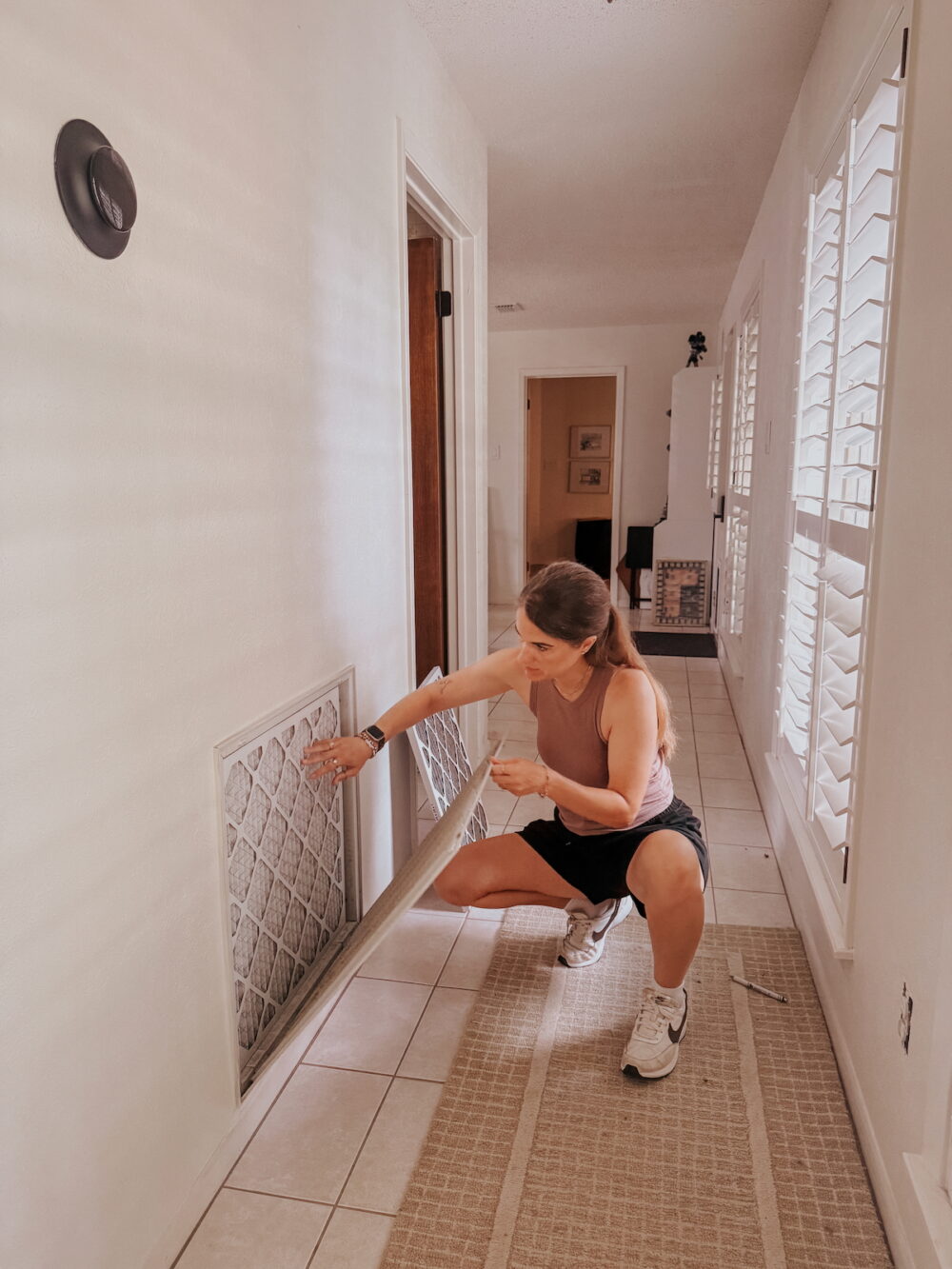
Rather than relying solely on a calendar reminder, get into the habit of checking your filter once a month. If it looks dirty, replace it. If it’s still relatively clean, you can likely leave it in place a little longer. As you can see from the photo below, I definitely let mine go for more than a month this past time!! I highly recommend setting a calendar alert to help you remember to check it, so your filters don’t look like mine.
How to Find the Right Air Filter
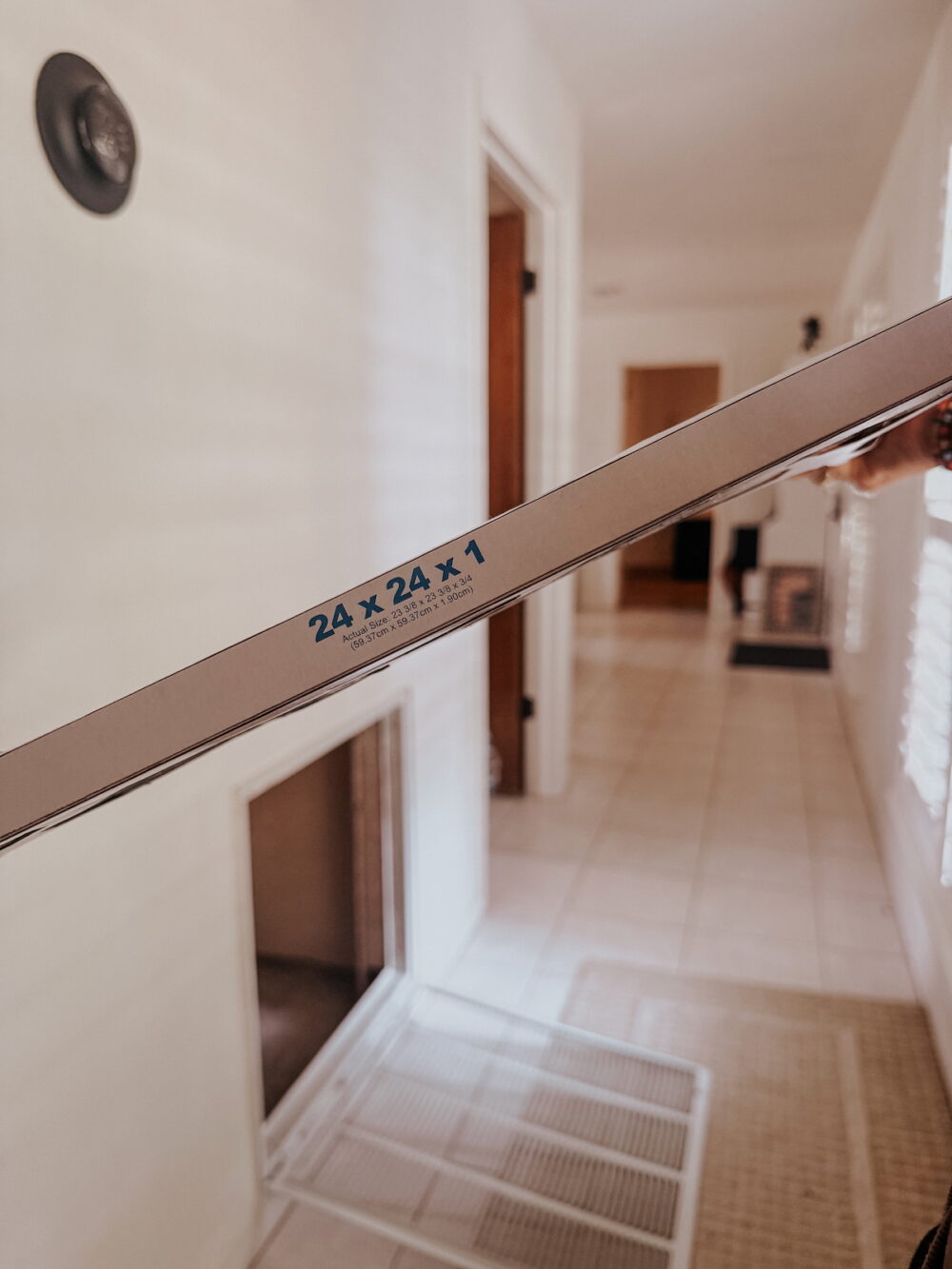
Before replacing your filter, you’ll need to know the correct size. Most air filters have the dimensions printed directly on the frame. Common sizes include:
- 16 x 20 x 1
- 20 x 20 x 1
- 20 x 25 x 1
- 16 x 25 x 1
If you can’t find the size printed on the existing filter, check your HVAC owner’s manual or look for a label on the furnace or air handler. You’ll also notice a MERV rating on many filters. This number indicates how effectively the filter captures airborne particles.
What is MERV?
MERV stands for Minimum Efficiency Reporting Value. It’s a scale from 1-20 that measures how effectively an air filter captures particles. Filters with higher MERV ratings have tighter weaves and can trap smaller contaminants. Most standard HVAC systems use a filter with a rating of 8-11. If you have allergies or pets, you might want to stick to a rating of 11-13.
For most homes, a filter with a MERV rating between 8 and 11 provides a good balance between filtration and airflow. Remember that a higher rating isn’t always better! Using a filter that’s too restrictive for your system can reduce airflow and put unnecessary strain on the equipment.
When in doubt, stick with the manufacturer’s recommendation.
How to Change an Air Filter
Changing an HVAC filter is a quick project that requires no special tools.
Step 1: Turn Off the HVAC System
For safety, turn off your heating or cooling system before removing the old filter.
Step 2: Locate the Filter
Depending on your setup, the filter may be located:
- Behind a return air grille in a wall or ceiling
- Inside the furnace cabinet
- Near the air handler
If you’re unsure where yours is located, follow the return ductwork to the HVAC unit or consult your owner’s manual.
Step 3: Remove the Old Filter
Slide the filter out carefully to avoid knocking dust and debris loose. Take a moment to check the size printed on the frame if you haven’t already purchased a replacement.
Step 4: Check the Airflow Direction
Every air filter has arrows printed on the frame indicating airflow direction. Before installing the new filter, note which direction the arrows are facing on the old one. The arrows should point toward the HVAC unit, not toward the room.
Step 5: Install the New Filter
Slide the replacement filter into place, making sure the airflow arrows are pointing in the correct direction.
The filter should fit snugly without bending or forcing it into position.
Step 6: Turn the System Back On
Once the new filter is installed, restore power to the HVAC system and you’re done.
Signs It’s Time to Replace Your Air Filter
Even if you haven’t reached the recommended replacement timeline, there are a few signs your filter may need attention:
- Visible dirt buildup on the filter
- Increased dust around your home
- Reduced airflow from vents
- HVAC system running longer than usual
- Higher energy bills
- Allergy symptoms becoming more noticeable indoors
If you notice any of these issues, it’s worth checking the filter before assuming a larger HVAC problem is to blame.
Common Air Filter Mistakes to Avoid
Installing the Filter Backwards
This is probably the most common mistake homeowners make. Always follow the airflow arrows printed on the filter frame.
Choosing the Wrong Size
Even a slightly incorrect filter size can allow air to bypass the filter, reducing effectiveness.
Waiting Too Long Between Replacements
A completely clogged filter can restrict airflow enough to impact system performance and efficiency.
Assuming Expensive Filters Are Always Better
Higher-priced filters aren’t necessarily the best choice for every HVAC system. Always follow manufacturer recommendations.
Changing your air filter may not be the most exciting home maintenance task, but it’s one of the simplest ways to help your HVAC system run efficiently and keep your home comfortable. Sometimes the boring tasks are the most important!
Set a monthly reminder to check the filter, keep a few replacements on hand, and you’ll never have to wonder whether it’s overdue again. Five minutes of maintenance every month can save you a lot of headaches down the road.