
The Easiest DIY Wall Shelves
I installed some incredibly simple DIY wall shelves in my kids’ rooms last week, and today I’m showing you how it’s done!
At our old house, both boys had a lot of built-in shelving that allowed for a ton of storage and display space. They both love collecting LEGO sets and have a ton of little tchotchkes that must be displayed.
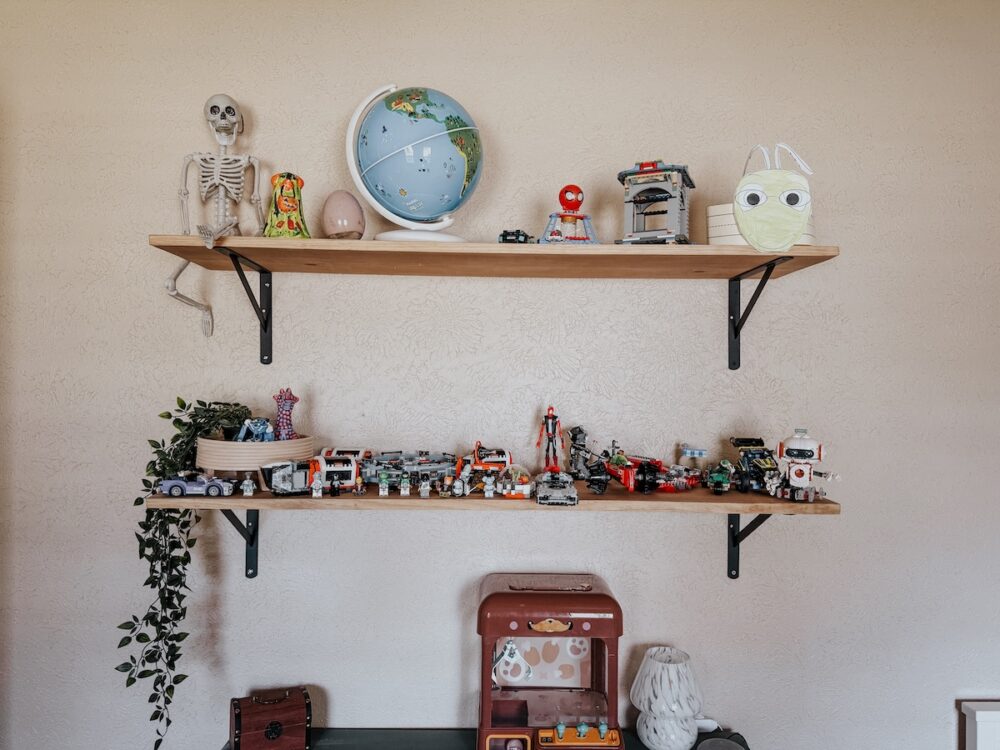
When we moved here, we didn’t really have any storage for their rooms. We’ve gathered up a few cheap, temporary options, but both boys have been begging for some shelves to be hung on their walls since the day we moved in. I finally got it done recently and today I’m sharing exactly how I made it happen.
How to Install Easy DIY Wall Shelves
Video Tutorial
If you’re the type that loves to see a project comes together visually, I put together a super quick (under 5 minutes!) video to show you the process. It should give you an idea of what to expect and hopefully a little bit of confidence to tackle this yourself.
Material Needed:
- 1×12 boards (you’ll need one per shelf)
- Shelf brackets
- Wall anchors
- Drill + driver
- Level
- Stud finder
Step One: Locate Studs + Measure for Shelves
First up, you’ll want to figure out where you want the shelves to be and find the studs in your wall. If you can, it’ll be easier to line up at least one of the brackets with studs in the wall! If not, you can use some anchors.
Determine how long you want your shelves to be and how many shelves you’d like to do. A common rule of thumb is to leave somewhere in the range of 12″ to 16″ between your shelves. But, there’s no right or wrong way to do it, and it should be determined by what you plan to use the shelves for! I went with 18″ between my shelves, because I wanted to leave plenty of room for them to display their taller LEGO sets.
Step Two: Prep Shelf Boards
I purchased 4′ boards from the store, so I didn’t have to cut them down at all. If you buy longer boards, you can use a miter saw to cut them to size (learn how to use a miter saw here).
I went with 1″ thick boards for my shelves, but you can do 2″ if you want a chunkier look. For me, I’m not sure if these will last forever (we haven’t even painted their walls yet, so a lot of change is still coming!), and so I decided to save a little money and go with the thinner shelves.
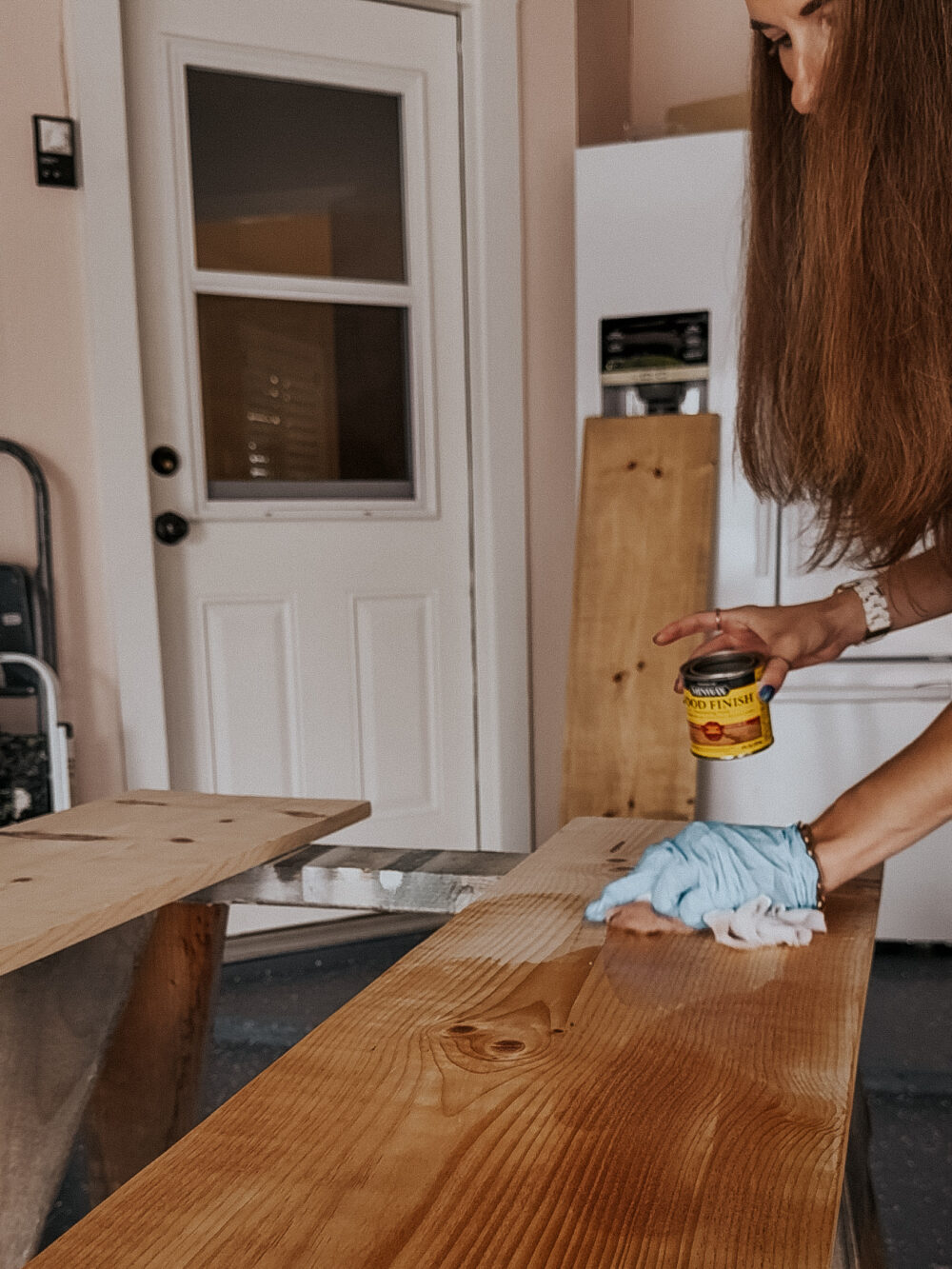
Once you have your boards and they’re cut down to size, you’re ready to stain or paint the shelves. I let each of the kids pick their preference.
Step Three: Hang Brackets
While you’re shelves are drying, you can go ahead and hang your brackets on the wall. You want them to sit no more than approximately 6-8 inches in from the end of each side of the shelf. Mne are closer to the edge because I wanted to be sure to hit studs on one side of each shelf.
Depending on what type of material you’re using for the shelf and how long your shelf is, you may need to add additional brackets to the middle.
Span Limits
The “span limit” of a material is the furthest distance it is recommended to have between supports to prevent sagging. This is assuming you’re putting a heavy load on the shelves, like books!
- Plywood shelves should be at least 3/4″ thick. Their span limit is 36″.
- 1×10 wood shelves have a span limit of 24″
- 1×12 wood shelves have a span limit of 28″
- 2×10 wood shelves have a span limit of 48″
- 2×12 wood shelves have a span limit of 56″
As you can see, I pushed the span limit of my shelves by only having two brackets on my shelves. But, I wasn’t worried about it since they’re only displaying LEGO and light toys on them. If they ever decide they’d like to display books or anything heavier, we’ll go back in and add another bracket!
If your bracket is going to be screwed into a stud, you can simply attach it directly to the wall. However, if you won’t be able to hit a stud, be sure to use a wall anchor! You can learn more about wall anchors – and how to choose the right one – here. I hit a stud on one side and used anchors on the other.
Here’s how to hang a bracket on a stud:
- Hold the bracket up on the wall at the height you’d like to hang it.
- Use a pen or pencil to mark where the holes for the bracket need to be on the wall.
- Pre-drill a small hole in the wall using your drill on each of the marks you made.
- Hold the bracket up again and line the holes in the bracket up with the holes in the wall.
- Use screws and your drill to attach the bracket to the wall.
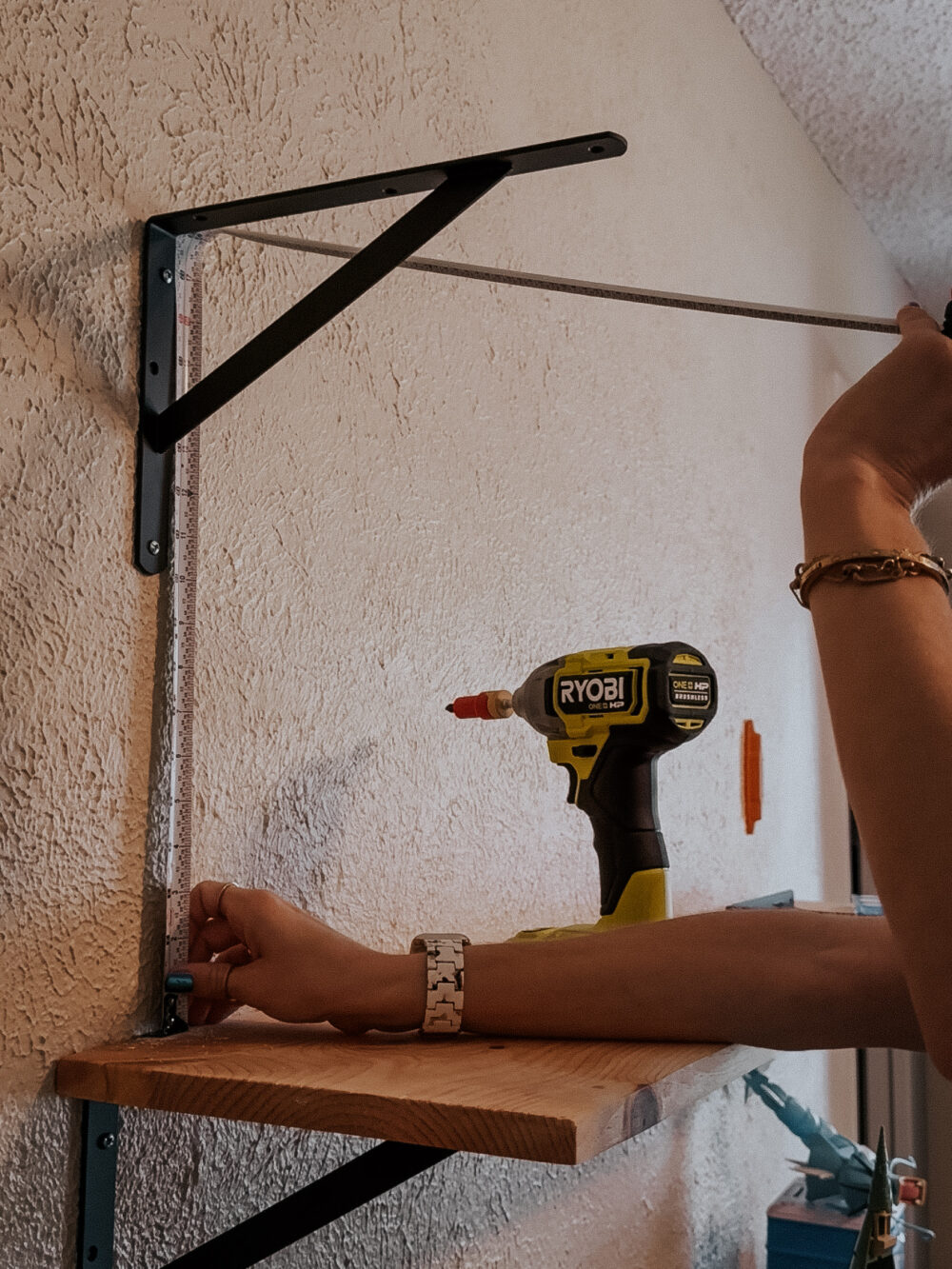
If you’re attaching the bracket to a spot that doesn’t have a stud, you’ll use the same process but you’ll drill a hole large enough for an anchor in the wall and add that prior to hanging the bracket! Use the post linked above if you need help installing an anchor.
After hanging the first bracket, be sure to do some careful measuring and work with your level to be sure that the second bracket is hung at the same height! This is what will determine if your shelf is level or not, so don’t rush the process.
Step Four: Add Shelf to Bracket
After hanging the brackets, you’re ready to add the shelf! Simply rest it on top of the brackets, and check to be sure it’s level. Once you’re happy with the positioning, you’ll attach it to the brackets – usually from underneath the shelf.
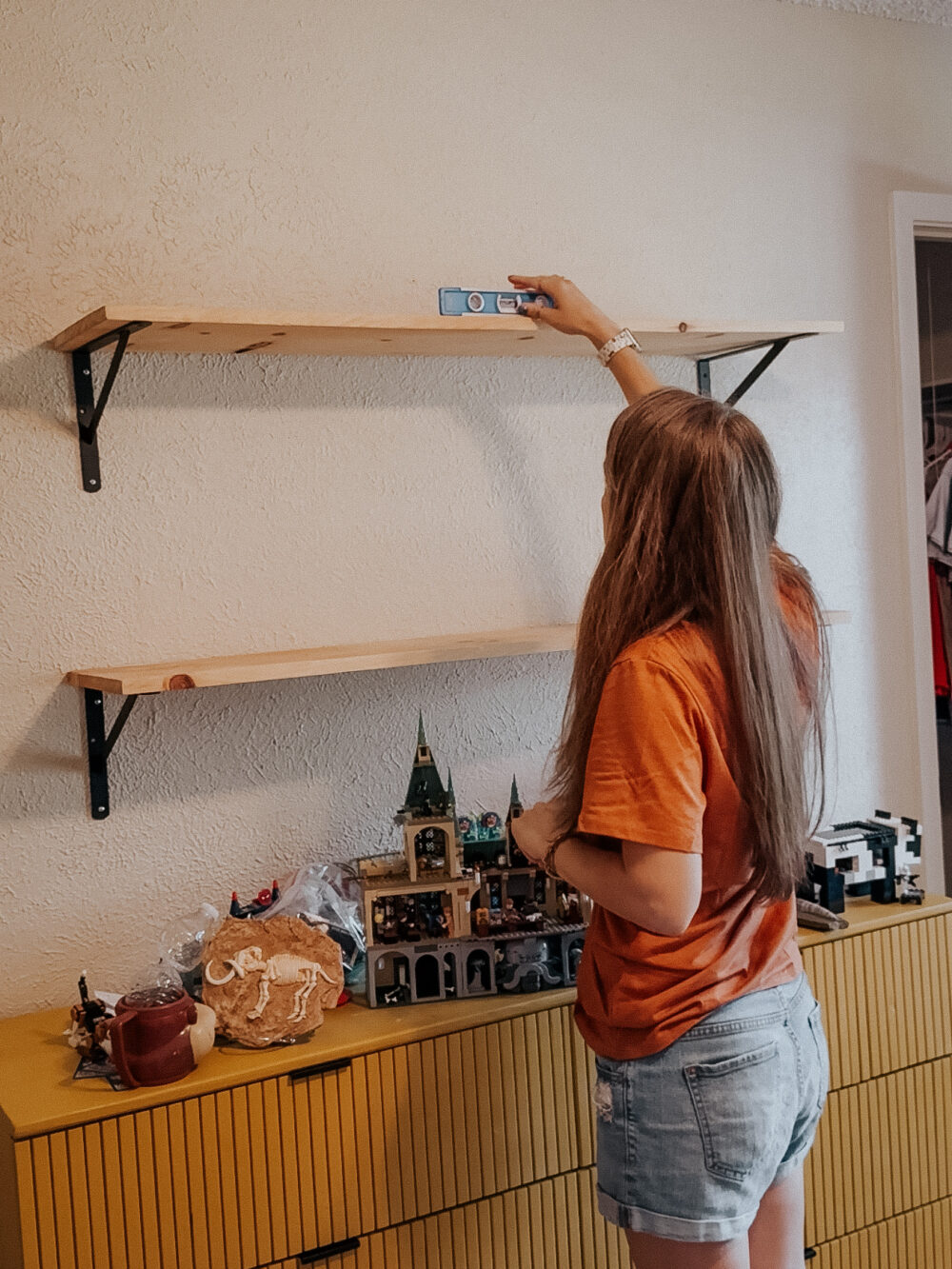
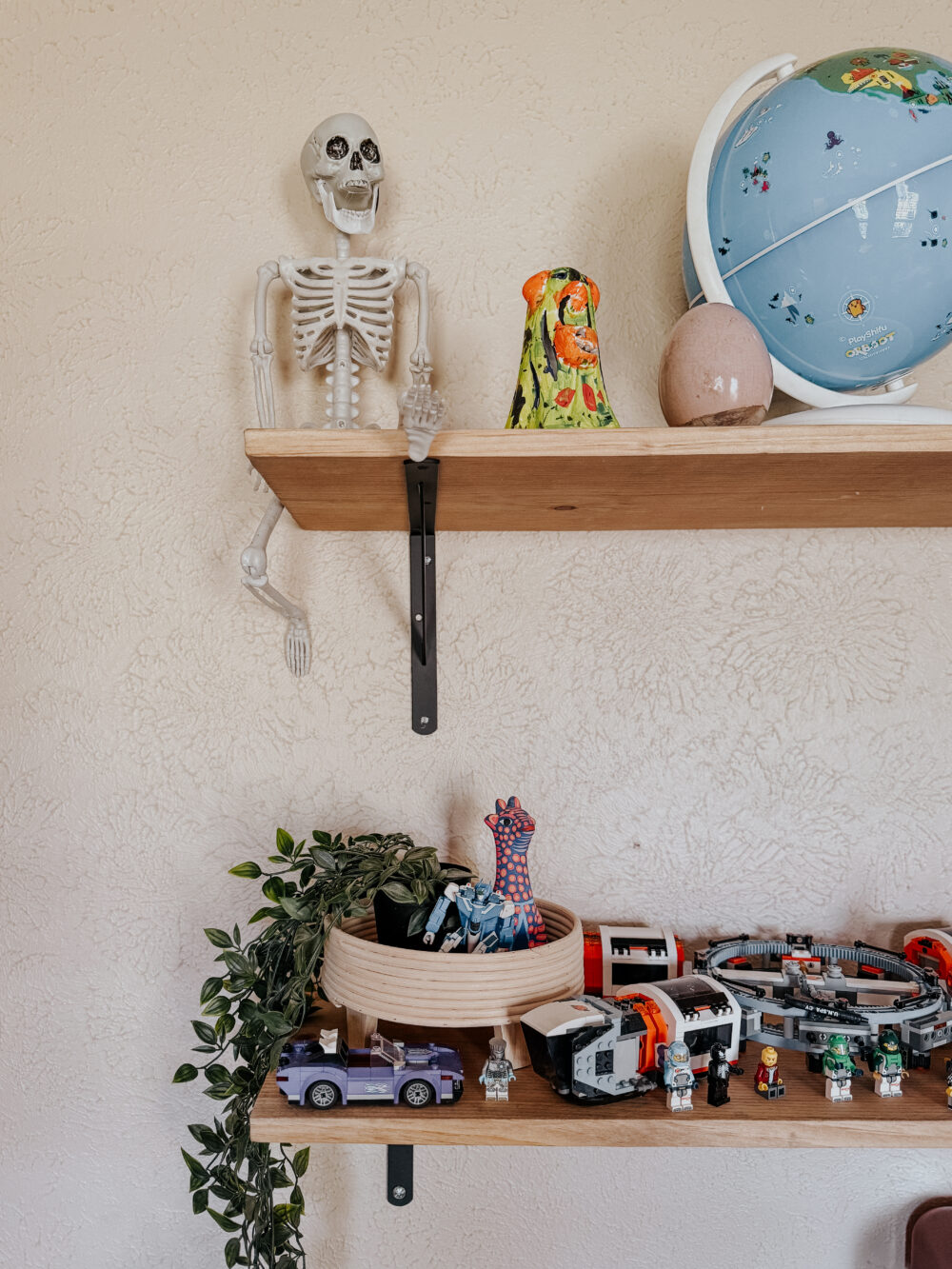
And then, you’re done! This is a really quick and easy project and it can be an incredibly affordable way to add a little extra storage to any space in your home.